
Fraud Prevention & Alerts
Every day, thousands of people fall victim to fraudulent e-mails, texts and calls from scammers pretending to be their bank. First State Bank of Red Wing wants to ensure that our customers are aware of the different types of scams our there and to know to Hang up, Don’t Click if it seems irregular. Call First State Bank of Red Wing before giving out any financial information!

Can you spot a phishing scam?
Take 5 minutes to become a pro by taking the #banksneveraskthat quiz.
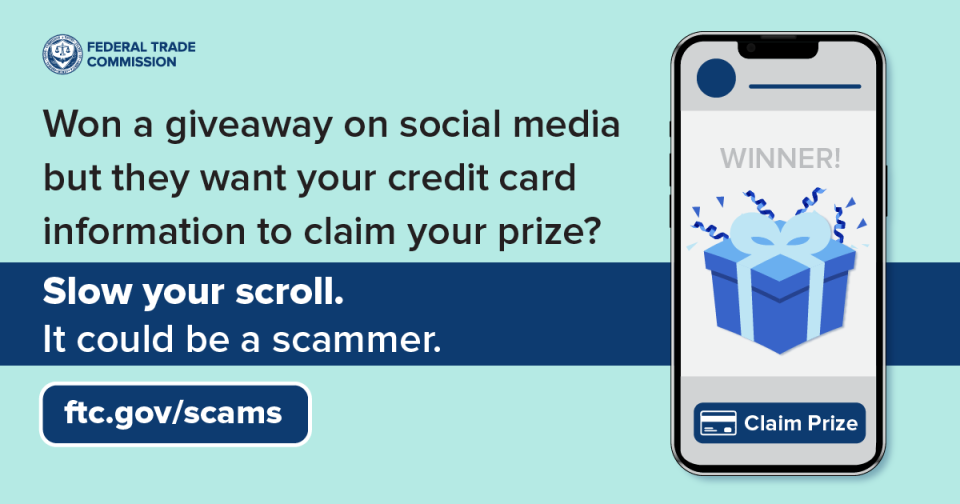
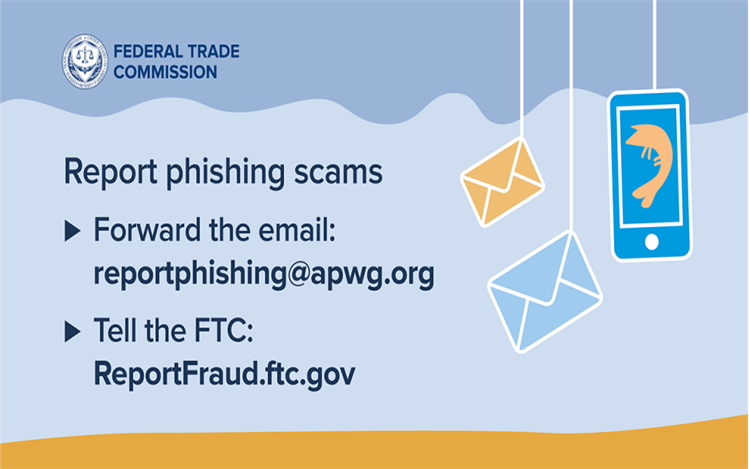
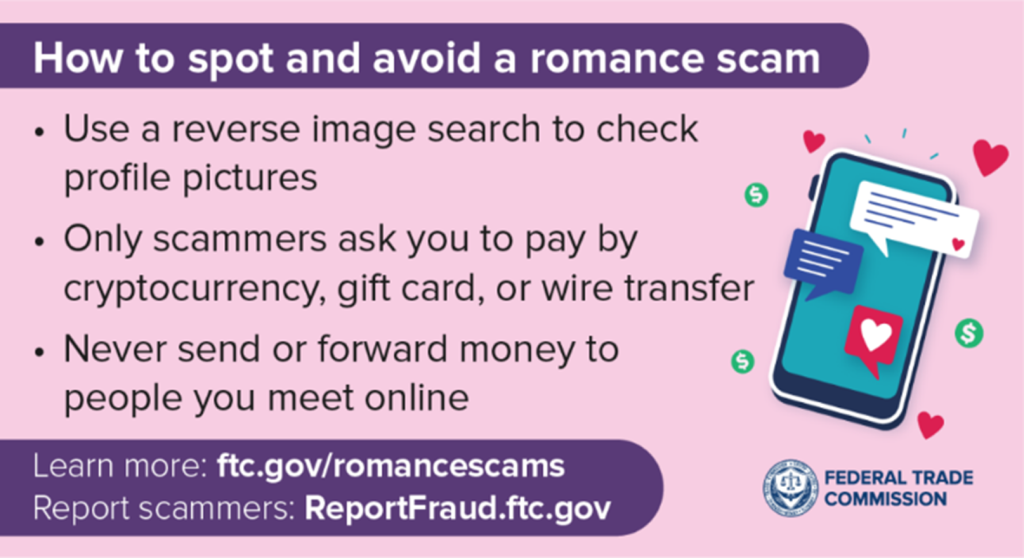
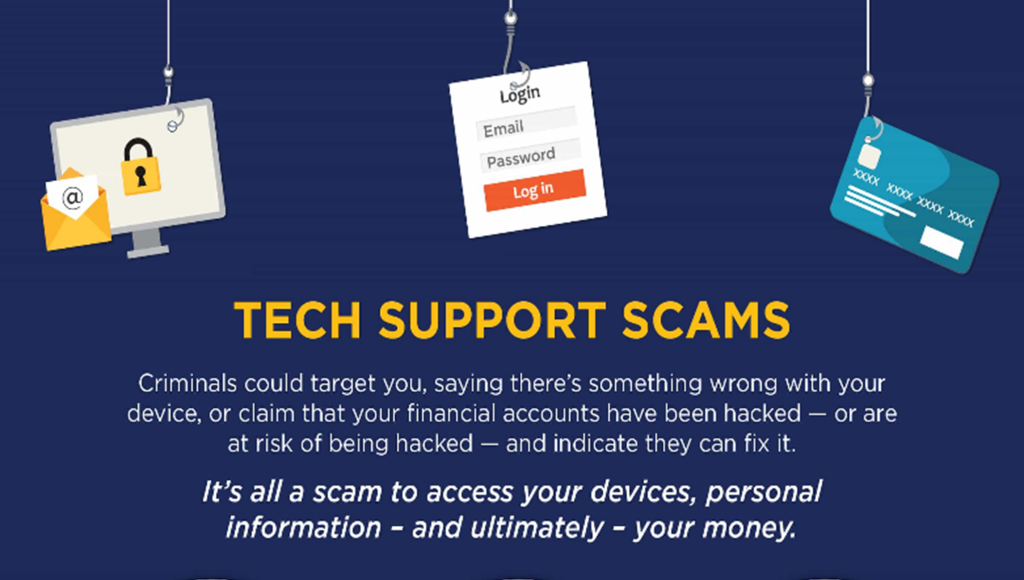
Fraud Alerts
At First State Bank of Red Wing, we believe that one of the best ways to arm yourself against fraud is with information. In this section we will provide you with links & articles that will alert you to any schemes you should know about and inform you of the resources that are available to help you protect your account information.
If you think your accounts have been compromised, let us know immediately by calling (651) 388-4714.
Preventing Fraud
The USA Patriot Act has paved the way for financial institutions to help prevent fraud, identify theft, and the spread of terrorism. It requires financial institutions to obtain more information from an individual or legal entity to help establish identity.
Your cooperation is needed when you open a new account or request a loan. You may be asked more questions to establish and confirm your identity. It may also be required for you to provide one or more of the following types of identification:
- Driver’s license
- Passport and country of issuance
- S. taxpayer identification (ID) number
- Alien ID card
- Any other government-issued document evidencing nationally or residence
How to Prevent Fraud
Guard your Social Security Number
- Never carry your Social Security card and know your surroundings when disclosing your Social Security number.
- Never provide your Social Security number unless you initiated contact and have confirmed the person or business’ identity.
- Do not record your Social Security number on a check, traveler check, gift certificate, etc., unless required by law.
- Do not use any part of your Social Security number as a Personal Identification Number (PIN) or password.
- If you must provide your Social Security number in an email or website, ensure that it is encrypted and know how the recipient will protect it.
Secure Your Computer
- Web browser updates are provided with your security in mind so keep them current.
- Operating system and software patches or service packs should be installed as soon as possible.
- Anti-spyware and anti-virus software helps detect and remove ‘bad’ software that can steal vital information.
- A firewall prevents unauthorized users from gaining access to the computer or monitoring transfers of information to and from the computer.
- Always use the highest level of security possible when setting up and connecting to wireless networks.
- Never transmit sensitive information over an unencrypted wireless network.
Eliminate Paper
- Sign up for direct deposit and have funds put into your account electronically without paper checks.
- Sign up for e-statements and stop receiving statements and canceled checks in the mail. View them online instead.
- Reduce the amount of mail and paper with your personal information printed on it to minimize the chance of criminals stealing it.
Types of Online Fraud
Malware
Malware, short for “malicious software,” includes viruses, spyware and trojans that are designed to infect or damage a computer system. Malware is often used to steal personal information and commit fraud. There are several easy ways to minimize the risk of malware:
- Updated security and system software can protect your computer from malware threats.
- Attachments or free software from unknown sources should not be opened or installed.
- Downloads from file sharing and social networking sites can be sources of malware.
- Pop-up ads asking for personal or financial information are likely fraudulent, so close them.
Phishing or Spoofing
Thieves may send you an email that looks like it comes from First State Bank of Red Wing. These emails ask you to go to a website that looks like First State Bank of Red Wing’s website and provide your personal account information. They may even ask you to call a phone number and provide account information, but the website is fake. Look for the following information to determine if the email is really from First State Bank of Red Wing:
- First State Bank of Red Wing emails will never ask you to reply in an email with your personal information and any email that does should raise your concern.
- The message may contain claims that your account will be closed if you fail to confirm, verify or authenticate your personal information. First State Bank of Red Wing will not ask you to verify your information in this way.
- Messages about system and security updates claim the Bank needs to confirm important information due to upgrades and states that you must update your information online. First State Bank of Red Wing will not ask you to verify information in this way.
- Typos and other errors are often the mark of fraudulent emails or websites. Watch out for typos or grammatical errors, awkward writing, and poor visual design.
- Offers that sound too good to be true often are. You may be asked to fill out a short customer service survey in exchange for money being credited to your account, and you are then asked to provide your account number for proper routing of the supposed credit. First State Bank of Red Wing will not request your information in this way.
Money Mules
Money mules are unsuspecting victims who become middlemen for criminals trying to launder stolen funds. Victims are lured by the promise of love or a new career opportunity making large sums of money for minimal work. Criminals recruit money mules, send them stolen money and then ask the money mules to wire or transfer the money unwittingly to the criminals. Using the money mule masks the criminal’s identity.
The money mule may keep a commission for performing the transfer or wire. The victims of these scams may not only have their bank accounts closed and financial reputation ruined, but are often left financially responsible for returning the stolen funds.
Common signs of a money mule scam are:
- Accepting large sums of money into your account for a new job.
- Transferring or wiring funds out of your account to people you do not know.
- Opening a new account to receive money from someone you do not know.
- Overseas companies requesting money transfer agents.
- Vishing
Vishing uses Voice over Internet Protocol (VoIP) to call, leaving an automated recording. It alerts the consumer that their account has experienced unusual activity. The message instructs the consumer to call the same phone number shown in the spoofed caller ID with the same name as the bank they are pretending to represent. Sometimes criminals who try to get consumers to turn over personal data send emails and text messages containing fraudulent phone numbers.
Rather than provide any information, you should hang up and contact First State Bank of Red Wing at (651) 388-4714
Types of Mobile Fraud
Fake Mobile Banking Apps
Criminals may develop and publish fake mobile banking applications to steal your online banking credentials. Always look for these signs before installing a mobile banking application:
- The developer or publisher of the application is First State Bank of Red Wing.
- Only download the application from the official ‘store’ for your device.
- Mobile applications for First State Bank of Red Wing are free. If there is a charge for the application, it’s not legitimate.
SMShing
SMShing is phishing via SMS text messaging. A criminal will send a text message to trick you into replying with financial or personal information or clicking links that will install viruses onto your mobile device.
- Do not respond to a text message that requests personal or financial information; First State Bank of Red Wing will never ask you for this.
Stolen Devices
- Password protect your device.
- Turn on the screen lock.
- Keep records of the make, model, serial number and IMEI number of your device.
- If your device is stolen, contact First State Bank of Red Wing so we can get your online banking information changed.
Detecting Fraud
The best detector of fraud or identity theft is you. The sooner fraud is detected, the lower the financial impact. By monitoring your accounts you can look for strange activity and act fast to minimize the financial impact.
Recognize Fraud or Identity Theft
It is important to recognize suspicious activities that may indicate fraud or identity theft.
Fraud is when someone uses your accounts to make unauthorized purchases, usually when the card or account number has been stolen. Possible signs of fraudulent activity are:
- You do not receive an expected bill or statement by mail.
- You see unexpected charges on your account.
- Your credit report contains accounts not yours or lists inaccurate information.
- You receive notice that you have been denied credit, but you did not apply for credit.
Identity theft happens when a thief steals information such as your name, birth date or Social Security number to open credit cards, mortgages and other accounts without your knowledge. Identity theft may be indicated by:
- There are new accounts on your credit report that are not yours.
- You receive credit cards you did not apply for.
- You receive calls from debt collectors for something you did not buy.
Monitor Your Accounts Regularly
Check your account activity frequently looking for anything unusual. View your account activity either online or by monthly statement to detect fraud earlier and contact your financial institution immediately if you see anything suspicious. If you suspect that any of your accounts with First State Bank of Red Wing have been compromised, please notify us immediately.
- Over 50 percent of identity fraud is discovered by the victim.
- Customers with electronic access to their accounts detect fraud or identity theft earlier than those who rely on paper statements.
- Customers enrolled in Online Banking that use our email alert functions receive timely notification about activity in their accounts, which can help identify fraud quickly.
- Receiving e-statements instead of paper statements helps reduce the risk of mail fraud.
Check Your Credit Report Annually
By monitoring your credit report you can verify that no new accounts or loans have been approved in your name using stolen information. National credit reporting agencies are required to provide you with free copy of your credit report once every 12 months. You can make this request by visiting www.annualcreditreport.com or calling (877) 322-8228. Your legal rights are explained on the Federal Trade Commission’s website at www.ftc.gov.
Resolving Fraud
Fraudulent Activity
Report fraudulent activity on your First State Bank of Red Wing accounts or Online Banking:
- Call (651) 388-4714 Or contact your nearest branch
If possible, provide the check number for the last check that was written, or the name of the person or business to whom it was written. Digital copies of your checks are available through Online Banking.
Lost, Stolen, Missing or Found ATM or Debit Card
During regular business hours:
- Call (651) 388-4714
- Or contact your nearest branch
Outside regular business hours:
- Contact 1-888-227-3096
Phishing Email
To report a suspicious email using First State Bank of Red Wing’s name, please immediately contact us at (651) 388-4714
What to do if you think someone has stolen your identity:
- Contact First State Bank of Red Wing immediately to close any accounts you believe have been compromised.
- Contact the three major credit bureaus to place a fraud alert on your credit file.
- Equifax – (888) 766-0008
- Experian – (888) 397-3742
- Trans Union – (800) 680-7289
- Close other accounts you know or believe have been opened fraudulently or tampered with.
- File a police report. Get copies to submit to any creditor that may require proof of a crime.
- File your complaint with the FTC.
- For more information about fighting ID theft and reporting fraud, go to www.FTC.gov.
Dealing with a Data Compromise
Data compromise is usually an organized theft of ATM, debit, or credit card information through third party processors, computer theft, stolen storage tapes, company insiders working for a merchant or merchant contractor, or merchant data breaches.
If a data breach affecting your accounts occurs, First State Bank of Red Wing receives information from outside sources such as Visa, MasterCard or law enforcement agencies.
We understand that learning your account information may have been compromised can be alarming. In the event your card data account has been compromised:
- First State Bank of Red Wing will proactively close your card and issue a new one to help protect your account.
- It does not mean fraud will occur on your account.
- It does not mean you will become a victim of identity theft.
- If you notice any fraudulent charges to your account, contact us immediately by calling (651) 388-4714.
Protect Your Information
- Always know where your card is. If you misplace it, contact us immediately so we can block the card from use.
- Regularly monitoring your account activity is the best way to help detect if you have been a victim of fraud.
- First State Bank of Red Wing’s Online Banking allows you to access your account at your convenience.
- For added protection, you can set up Online Banking Alerts that notify you about important activity in your accounts, which can help identify fraud quickly.
- Signing up for electronic statements may also help reduce your risk of mail fraud.
- If you receive your statements in the mail, review your statement as soon as possible after it is delivered and immediately report any fraudulent transactions.